
From Preliminare to Rogito: Italy’s Property Purchase Timeline Explained
Buyers who have been through a property purchase in the UK, Germany or the Netherlands often assume the Italian process works the same way, just in Italian. It doesn’t. Italy has its own two-stage structure — the preliminare and the rogito — with legal weight attached to each stage that surprises first-time foreign buyers. If you’re still at the very start, our overview of how to buy property in Puglia as a foreigner is worth reading first. Here’s what actually happens, in order, once you decide to make an offer on a property in Salento.
Stage One: The Proposta d’Acquisto (Purchase Offer)
Before anything is binding, you typically submit a proposta d’acquisto — a written offer with a price and basic conditions, often accompanied by a small good-faith deposit (caparra) held by the agency. If the seller accepts in writing, the offer becomes binding on both sides. This is the point at which many foreign buyers wrongly assume they can still walk away without consequence — once accepted, you cannot.
Stage Two: The Preliminare (Compromesso)
The preliminare di vendita — often called the compromesso — is the real contract. It sets out the final price, payment schedule, completion date, and condition of the property, and is signed by both parties, ideally after your lawyer has reviewed it. At this stage you pay a caparra confirmatoria, typically 10-20% of the price. This deposit has real legal teeth: if you pull out without valid cause, you forfeit it; if the seller pulls out, they must return it doubled. Since 2023, most preliminari for properties sold through licensed agents are registered in the Conservatoria (land registry) within the transaction, giving you protection against the seller reselling to someone else or the property being encumbered before completion.
Between Preliminare and Rogito: What Happens
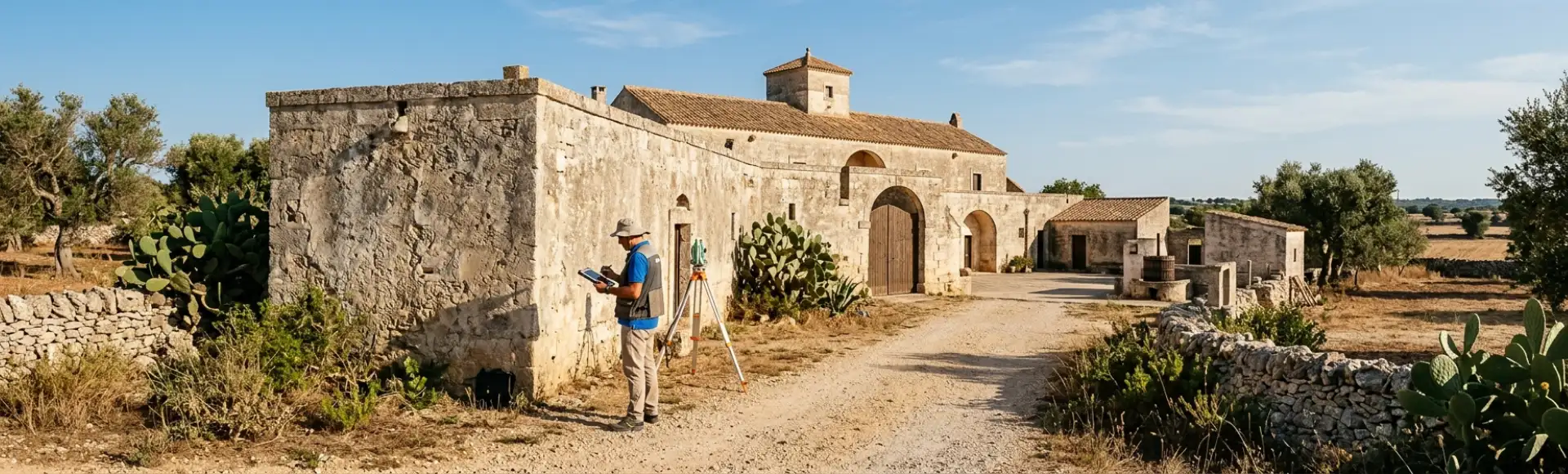
This gap — typically 60 to 120 days — is when the real due diligence happens: your notary and lawyer verify the cadastral records, check for existing mortgages or liens (ipoteche), confirm urbanistic compliance, and prepare the deed. If you are financing with a mortgage, this is also when the bank completes its valuation and approval. Foreign buyers should use this window to finalise their codice fiscale and power of attorney, open an Italian bank account if needed, and arrange the currency transfer for the balance — and this is also the natural point to work through a full due diligence checklist before the rogito date is set.
Stage Three: The Rogito (Notary Deed)
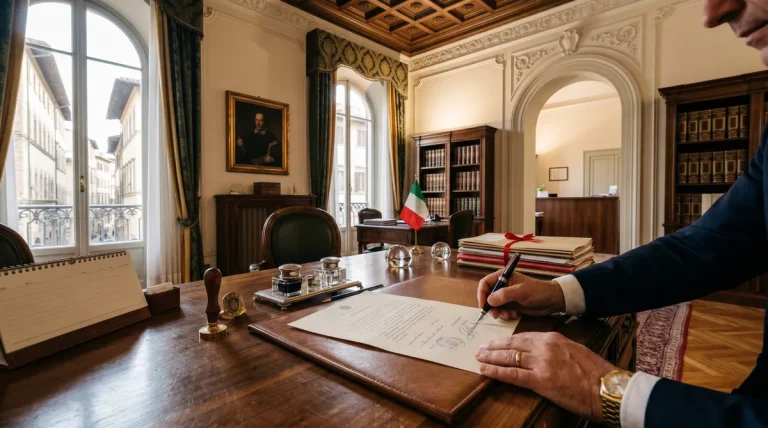
The rogito notarile is the final transfer of ownership, signed in front of a notary — a neutral public official, not your representative, who verifies the deed is legally sound and collects the applicable taxes on behalf of the state. You pay the balance of the price, the notary’s fee, and the applicable registration taxes at this appointment. If you cannot attend in person, a procura (power of attorney) allows a representative — often your lawyer — to sign on your behalf, which is common and entirely normal for international buyers. Immediately after signing, the notary registers the deed and you legally own the property.
Where Foreign Buyers Get Caught Out
- Treating the preliminare as informal. It is not a “letter of intent” — it is enforceable, and the deposit is genuinely at risk.
- Underestimating the codice fiscale timeline. This has to exist before the preliminare in most cases, not just before the rogito — apply early through an Italian consulate or in person in Italy.
- Assuming currency transfers are instant. International wire transfers for six-figure sums can take several business days and need to land before the rogito date, not on it.
- Not budgeting time for translation. If you don’t speak Italian, the deed can be read with a certified interpreter present, which needs to be arranged in advance, not on the day.
Frequently Asked Questions
Can I back out after signing the preliminare?
Only for reasons specified in the contract or under general Italian contract law (undisclosed defects, failure of a suspensive condition like mortgage approval). Backing out without valid cause means forfeiting your caparra confirmatoria.
Do I have to travel to Italy for the rogito?
No. A notarised and apostilled power of attorney (procura) lets a representative, typically your lawyer, sign on your behalf. Many of our international clients complete their purchase without being in Italy for the final signing.
How long does the whole process take from offer to ownership?
Typically 2-4 months from accepted offer to rogito, depending on whether you need a mortgage, how quickly documentation is gathered, and notary availability. Cash purchases with straightforward title tend to move faster.
Sources: Notariato.it — guida al rogito notarile; Agenzia delle Entrate — registrazione dei contratti preliminari.
Free: The Salento Buyer's Checklist & Cost Breakdown
Know exactly what buying property in Salento costs — before you make an offer. Get the free 2026 checklist and total-cost breakdown by email.