Notary Costs in Italy: Complete Guide for Foreign Property Buyers
When buying property in Italy as a foreigner, the notary fee is one of the most misunderstood costs in the process. This guide explains what the notary bill is made of, what changes it, and how to budget for it when you buy in Salento or anywhere in Puglia.
What Does a Notary Do in an Italian Property Purchase?
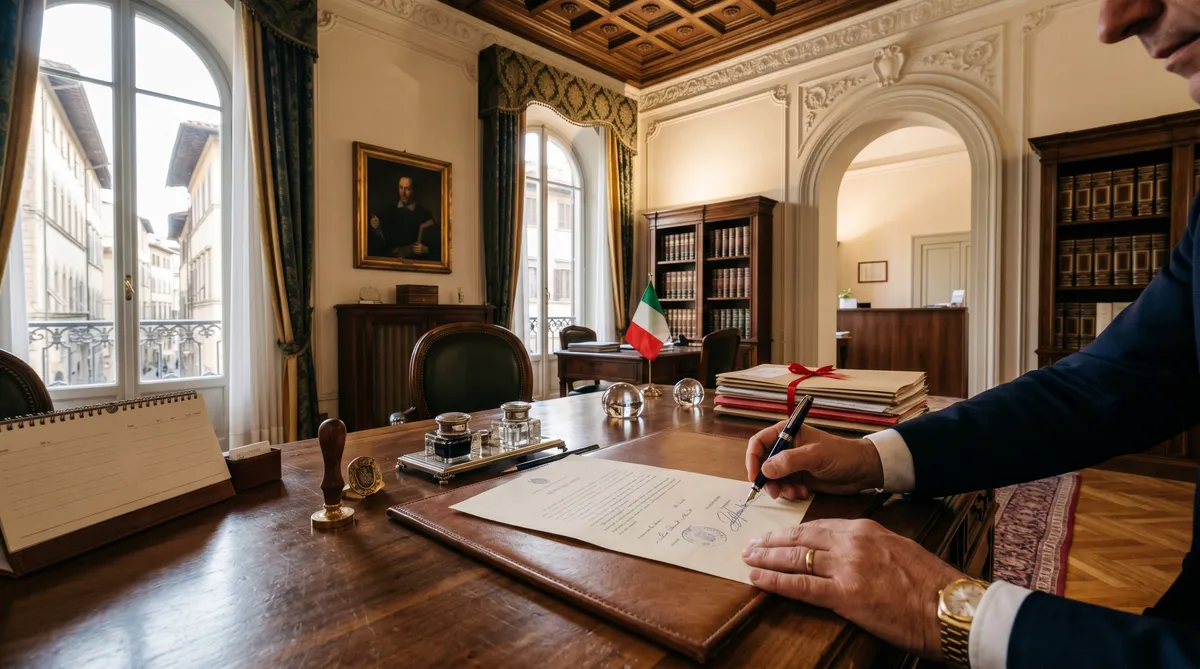
In Italy, the Notaio (notary public) is a state-appointed official who verifies the legality of the property transaction, conducts title searches, checks for mortgages or charges on the property, drafts the deed of sale (Rogito), and registers the transfer with the Land Registry (Agenzia delle Entrate). The notary is not your lawyer — they act as a neutral public officer for both parties and the Italian state.
How Much Does a Notary Cost in Italy?
Notary fees in Italy are not fixed by law: each notary sets his or her own fee, so quotes for the same purchase can differ. The only reliable figure is a written estimate (preventivo) from the notary you choose. Ask for it before you commit, and check what it includes: VAT and the expenses the notary advances for searches and copies.
Full Breakdown of Costs at the Notary
The total amount you pay at the notary’s office on signing day includes several separate items:
- Notary professional fee — the notary’s remuneration (get it in writing, as described above)
- Registration tax (Imposta di Registro) — 9% of the cadastral value for a second home; 2% if you transfer residency to Italy within 18 months of purchase
- Mortgage tax (Imposta Ipotecaria) — fixed €50 (second home). If you take a mortgage, a separate substitute tax on the loan applies: 0.25% for a first home, 2% otherwise
- Cadastral tax (Imposta Catastale) — fixed €50 (second home)
- Land Registry fee — approx. €200–€500 depending on the transaction
- Notary disbursements — costs the notary advances on your behalf (searches, copies, stamps)
Second Home vs Primary Residence: The Key Tax Difference
The single biggest variable in your notary bill is whether you are buying as a second home or as a primary residence (prima casa).
- Second home: Registration tax = 9% of cadastral value. Fixed taxes of €50 each for mortgage and cadastral.
- Primary residence: Registration tax = 2% of cadastral value. Fixed taxes of €50 each. You must transfer your official residency (residenza anagrafica) to the Italian property within 18 months of purchase.
For most foreign buyers purchasing a holiday home or investment property in Salento, the 9% second-home rate applies. The cadastral value is usually well below the market price, so the effective tax burden is lower than the headline rate suggests.
Practical Example: Purchase Taxes on a €250,000 Property in Lecce
- Purchase price: €250,000
- Cadastral value (estimated): €100,000
- Registration tax (9% of cadastral): €9,000
- Mortgage + cadastral taxes: €100
- Taxes in this example: €9,100 (about 3.6% of the purchase price), before the notary fee, legal fees and any agency fee
Who Chooses the Notary in Italy?
By Italian law, the buyer chooses and pays for the notary. This is important: do not accept a notary proposed by the seller or developer without independent verification. We always recommend choosing a local notary with experience in transactions involving foreign buyers. We can recommend trusted notaries in Lecce and Salento.
Do I Need a Separate Lawyer as Well?
The notary does not represent you — they represent the transaction. For foreign buyers, we strongly recommend an independent lawyer (avvocato) or bilingual geometra to review the preliminary contract (compromesso) before you sign and pay the deposit. Legal fees typically run €1,500–€3,000 for a standard transaction.
Questions? We Can Help
The agency behind Salento Properties has worked in Salento since 1994, and this site is its English-language platform for foreign buyers. We work with trusted local notaries and can connect you with English-speaking legal support.
Frequently Asked Questions
How much does a notary cost in Italy for a property purchase?
Notary fees in Italy are not fixed by law: each notary sets his or her own fee, so quotes for the same purchase can differ. Ask the notary you choose for a written estimate (preventivo) before you commit, and check what it includes.
What is the registration tax when buying property in Italy as a foreigner?
For a second home, the registration tax (Imposta di Registro) is 9% of the cadastral value — usually well below the market price. If you transfer your official residency to Italy within 18 months of purchase, the rate drops to 2% (prima casa concession). Most foreign buyers purchasing holiday homes in Salento pay the 9% rate.
Who pays the notary fees when buying property in Italy?
By Italian law, the buyer chooses and pays for the notary. This is different from some other countries where the cost is shared. The buyer’s right to choose the notary is important: do not accept a notary proposed by the seller without independent verification.
What is the total cost of buying a property in Italy beyond the purchase price?
There is no single total, because each notary sets his or her own fee. The taxes depend on who sells. From a private seller they are worked out on the cadastral value: on a €250,000 second home with a cadastral value of €100,000 they come to €9,100, about 3.6% of the price. From a builder selling a new home, VAT is charged on the price itself (10% on a second home, 4% on a first home) plus €600 in fixed taxes, so the same second home bought new carries €25,600 in taxes. The notary fee, legal fees if you use an independent lawyer (€1,500–€3,000) and any agency fee come on top.
Free: The Salento Buyer's Checklist & Cost Breakdown
Know exactly what buying property in Salento costs — before you make an offer. Get the free 2026 checklist and total-cost breakdown by email.