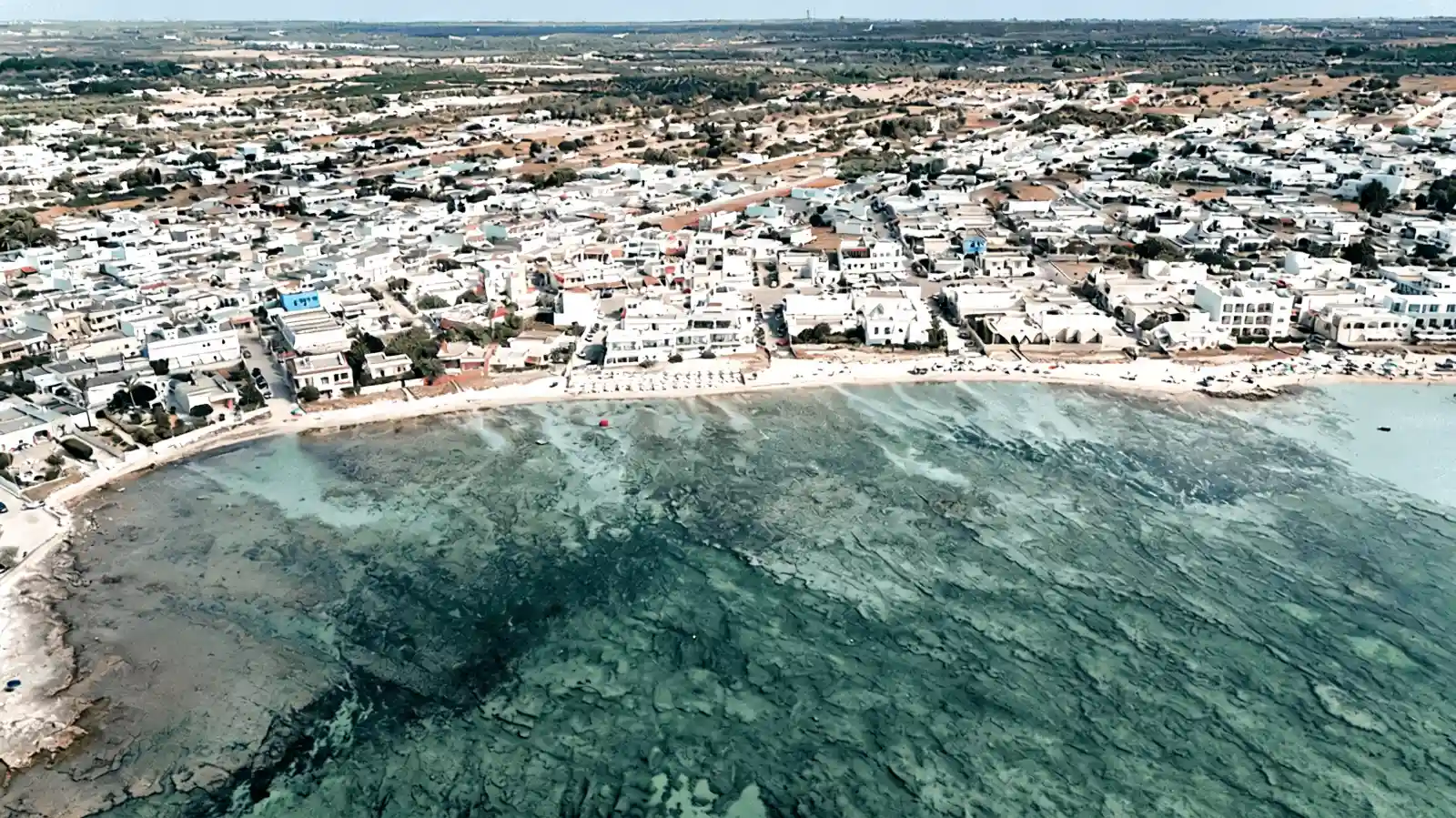
Buying a Seafront Property in Salento: The Coastal Rules Foreign Buyers Miss
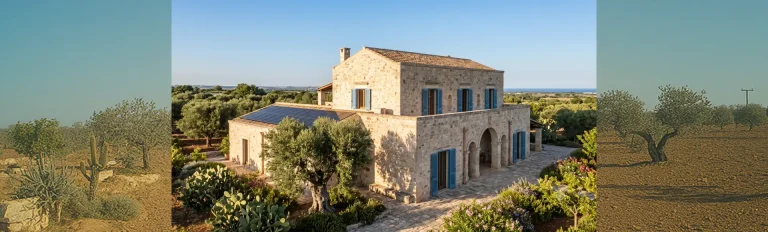
A villa two hundred metres from the water in Torre Lapillo and an apartment two kilometres inland in Nardò look like the same purchase on paper. They are not. The moment a Salento property sits inside the coastal belt, three separate layers of Italian law start governing what you may build, extend, rebuild or even repaint — and each layer has its own authority, its own paperwork and its own timetable.
Most foreign buyers discover this after signing the preliminary contract, usually when an architect explains that the pool shown in the listing photos was never authorised. This guide sets out the three rules that matter, what each one genuinely prohibits, and the specific checks that separate a clean seafront purchase from an expensive one.
What counts as “coastal” in Italian law
Coastal status is measured, not described. Italian law draws two lines inland from the sea: a 300-metre landscape protection belt and a 30-metre strip from the maritime state property boundary. A property can fall inside one, both or neither, and the distance is measured from the shoreline — not from the nearest road or beach access.
This matters because agents and sellers use “seafront”, “sea view” and “walking distance to the beach” loosely. The land registry and the municipal planning office do not. Before you form a view on a coastal property, establish precisely which belt it sits in, because that single fact determines everything that follows.
The 300-metre landscape zone
Under Article 142 of Legislative Decree 42/2004, all land within 300 metres of the shoreline is automatically protected for landscape purposes. Any work that alters the external appearance of a building in that belt requires autorizzazione paesaggistica — a landscape permit that sits on top of the ordinary building permit, not instead of it.
In Puglia this national rule is applied through the regional landscape plan, the PPTR, approved by the Region in February 2015. The PPTR is the document your architect will actually consult: it maps the coast in detail and attaches specific rules to each stretch.
What the 300-metre belt does not ban
For years the Region and the heritage authority read the PPTR as an absolute ban on new construction anywhere within 300 metres of the sea, including inside already-built-up towns. That reading was struck down. In April 2022 the Administrative Court in Lecce annulled it for consolidated urban areas, and in 2023 the Council of State rejected the appeals brought by the Ministry of Culture and the Puglia Region, freeing plots in coastal settlements including Lido Marini, Capilungo and Mancaversa.
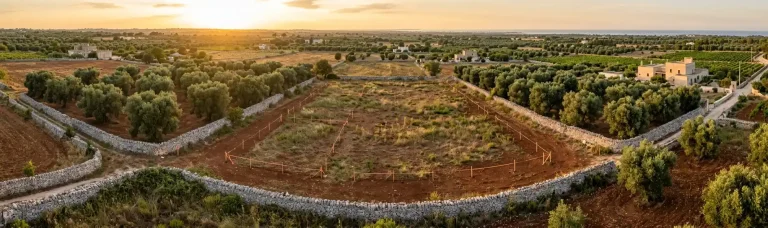
The practical translation: inside an established seaside town, building within the belt is possible but never automatic. On open coastline, new construction remains effectively closed. Treat any plot marketed as “buildable, 200 metres from the sea” as a claim to verify with the municipality, not a fact.
The 30-metre demanio strip
Closer to the water a second rule applies. Article 55 of the Italian Navigation Code requires authorisation from the maritime authority — the Capitaneria di Porto — for new works within 30 metres of the maritime state property boundary. The application is deemed refused if it is not granted within ninety days.
Ordinary and extraordinary maintenance that adds no volume falls outside this rule, so repainting a façade or replacing a roof does not trigger it. Extending a terrace, adding a room or building an annexe does. This is a separate consent from the landscape permit and the building permit: a property can hold two of the three and still be non-compliant.
Marine protected areas: Porto Cesareo and Nardò
The Porto Cesareo marine protected area, established by ministerial decree in December 1997, covers 16,654 hectares and 32 kilometres of coast across the municipalities of Porto Cesareo and Nardò. It is divided into Zone A (integral reserve, closed to everything except scientific research), Zone B and Zone C, with progressively lighter limits on fishing, anchoring and navigation.
Read the boundary carefully: the marine reserve regulates activity at sea, not building on land. It will not stop you renovating a house in Torre Lapillo. What it does affect is mooring rights, boat access and how the coastline in front of your property may be used — which is exactly what buyers who choose Porto Cesareo for its water care most about. It also anchors long-term value, because a protected coast cannot be developed into something else.
The four documents that settle it
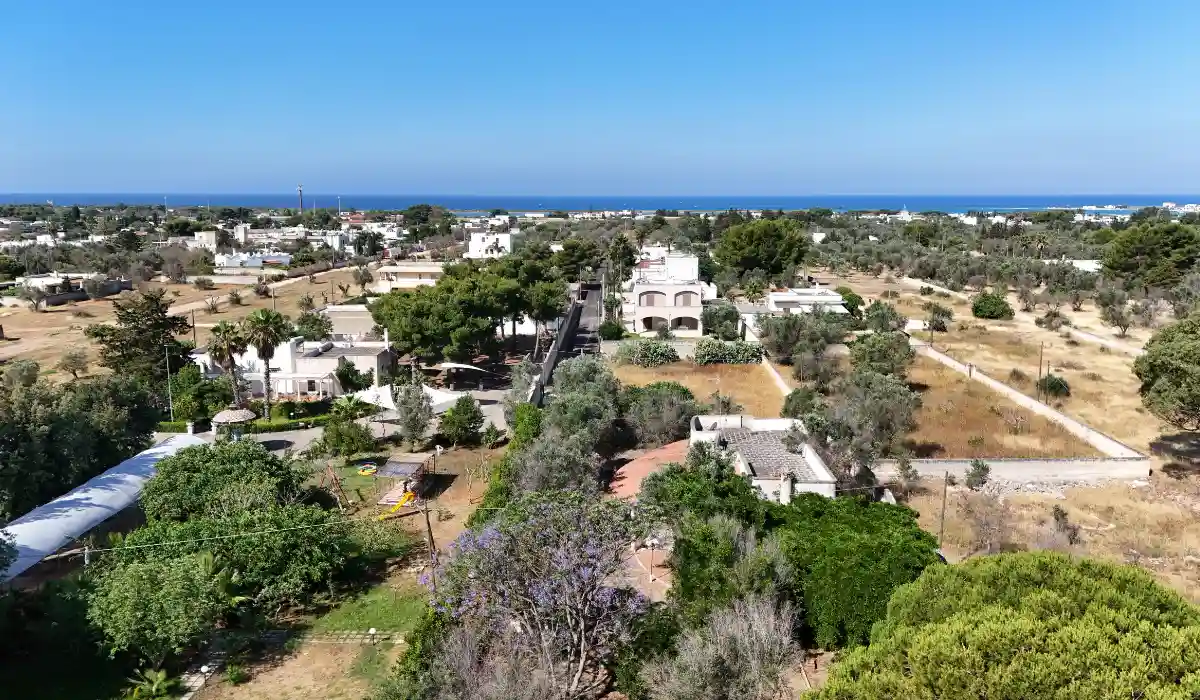
Everything above becomes manageable if you ask for four documents before committing. Your surveyor obtains them in days, not weeks, and any seller acting in good faith will produce them without friction.
- Certificato di destinazione urbanistica — the municipal certificate stating exactly which planning and landscape rules apply to the plot.
- The building permit history, including every landscape authorisation ever issued for the property.
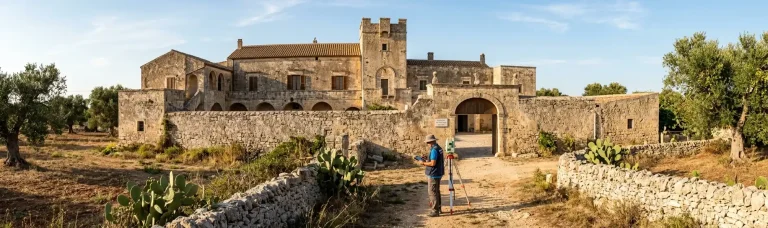
- Cadastral plan versus reality — a physical comparison of the registered floor plan against what is actually standing.
- The Capitaneria authorisation, if any structure sits within 30 metres of the state boundary.
The reason to be rigorous here is retrospective legalisation. Where a coastal building was extended without a landscape permit, Italian law allows a compatibility assessment only for works that created no new surface or volume. An unauthorised veranda, pool house or added floor inside the 300-metre belt often cannot be regularised at all — and the liability transfers to you at the deed. Our full due diligence checklist for Salento covers the wider verification process, and if you are considering an empty plot rather than an existing house, the rules differ again — see our guide to buying land to build in Salento.
What proximity to the sea costs
Around Lecce’s own marinas — Frigole, San Cataldo, Torre Chianca — values run from roughly €1,100 to €2,200 per square metre, with the spread driven almost entirely by distance to the water. On the Ionian side, Porto Cesareo and Torre Lapillo command a premium over comparable inland stock for the same reason.
That premium is durable precisely because the rules above cap supply. New seafront construction is scarce by law, which supports resale values but also means the existing coastal stock includes a meaningful share of buildings with irregular extensions. Price and risk sit in the same places. If you are still weighing which coastline suits you, our comparison of the Ionian and Adriatic sides of Salento is the place to start; for the purchase process end to end, see our complete guide to buying property in Puglia as a foreigner.
Frequently asked questions
Can I build a swimming pool at a seafront property in Salento?
Often yes, but it requires a landscape authorisation as well as a building permit, and a further consent from the Capitaneria di Porto if the pool falls within 30 metres of the maritime state boundary. Pools built without these permits inside the 300-metre belt are frequently impossible to regularise afterwards.
How long does a landscape permit take in Puglia?
The simplified procedure introduced by Presidential Decree 31/2017, used for minor works, must be concluded within 60 days. The ordinary procedure under Article 146 of Legislative Decree 42/2004 typically runs to around 105 days when no complications arise. Requests for additional documents suspend the clock.
Does the 300-metre rule stop me renovating an existing house?
No. Renovation of an existing legally built property is permitted inside the belt. What changes is the procedure: any work altering the external appearance needs landscape authorisation before it starts, and works that increase volume face materially tighter scrutiny than like-for-like restoration.
Can foreigners buy property directly on the coast in Italy?
Yes. There is no restriction on foreign ownership of coastal residential property in Italy, and buyers from the UK, Germany, the Netherlands and Scandinavia purchase along the Salento coast every year. The constraints described here apply identically to Italian and foreign owners — they concern the land, not the nationality of the buyer.
Before you make an offer on the coast
Coastal purchases in Salento reward preparation more than any other category. The rules are knowable, the documents are obtainable, and a compliant seafront property is one of the most resilient assets in the region precisely because so little new stock can legally be added.
Download our free Foreign Buyer’s Checklist, drawn from Camillo Barone’s book Buying Property in Puglia: The Insider’s Guide to the Salento Real Estate Market, and bring the verification list to your first viewing. If you have a specific coastal property in mind and want the planning position checked before you commit, contact our office in Lecce or Porto Cesareo — tell us the address and we will tell you which of the three belts it sits in.
Camillo Barone — FIMAA Estate Agent, Salento Properties (Studio RCS Srls)
Updated: 27 July 2026
Free: The Salento Buyer's Checklist & Cost Breakdown
Know exactly what buying property in Salento costs — before you make an offer. Get the free 2026 checklist and total-cost breakdown by email.