Transferring Money to Italy for Your Property Purchase: A Practical Guide
Buyers who have carefully negotiated a good price on a Salento property sometimes lose more on a bad currency transfer than they saved in negotiation — and never realise it, because a bank’s exchange rate margin is rarely made obvious. If you’re transferring pounds, dollars or Swedish kronor into euros for a property purchase, how you move the money matters almost as much as when. This sits alongside the other practical steps covered in our overview of how to buy property in Puglia as a foreigner, particularly if you’re also financing part of the purchase — see our guide to getting a mortgage in Italy as a non-resident.
Why Your Bank Is Usually the Most Expensive Option
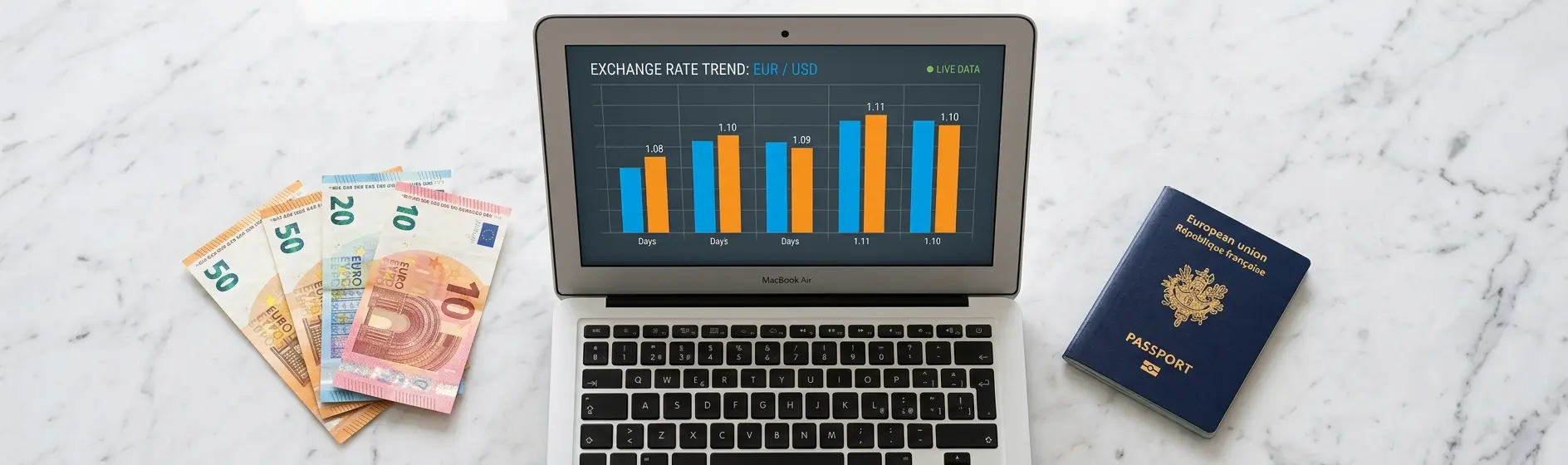
High street banks typically apply a margin on the exchange rate — often 2-4% below the real “mid-market” rate — on top of a flat transfer fee. On a €300,000 purchase, that margin alone can cost €6,000-€12,000 compared to a rate closer to the market mid-point. This isn’t a hidden fee exactly, but it’s rarely displayed clearly next to a headline “no transfer fee” offer, which is precisely how it stays unnoticed.
Specialist Foreign Exchange Providers
Currency brokers specialising in international property transactions typically offer rates much closer to the mid-market rate, along with tools most banks don’t: forward contracts (locking in today’s rate for a transfer happening in 60-90 days, protecting you from adverse movement before your rogito) and rate alerts. For a purchase of any significant size, the saving versus a bank transfer is usually large enough to be worth the modest extra step of opening an account with a broker.

Timing Around Your Purchase Milestones
- At the preliminare — you need funds ready for the caparra confirmatoria (typically 10-20% of the price), so this transfer should be arranged well before the signing date, not on the morning of. See our full preliminare-to-rogito purchase timeline for how this fits into the wider schedule.
- At the rogito — the balance needs to have landed in the relevant account (often the notary’s escrow or the seller’s account, depending on how the transaction is structured) before the signing appointment, not on the same day. International transfers, even fast ones, can take 1-3 business days to clear — build this buffer into your plan.
- Exchange rate volatility between offer and completion. If 60-90 days pass between your accepted offer and the rogito, exchange rate movements in that window can meaningfully change what the purchase actually costs you in your home currency. A forward contract removes this uncertainty if you want budget certainty over the chance of a favourable rate movement.
What You’ll Need to Provide
Remember your transfer needs to cover more than just the purchase price — budget separately for notary fees and property taxes in Italy, which are typically settled in euros at completion. Under EU anti-money-laundering rules, both your bank/broker and the receiving Italian party (notary or seller) will require source-of-funds documentation — proof of where the money came from (sale of a property, savings, inheritance, investment proceeds). Gather this early; it is one of the more common causes of last-minute delays for international buyers who assume a wire transfer is a same-day formality.
A Practical Sequence
- Get quotes from at least two specialist FX providers alongside your bank, comparing the actual rate offered, not just the advertised fee.
- Open the FX account and complete identity/source-of-funds verification well before you need to transfer anything — this alone can take several days for a new account.
- Consider a forward contract if there’s a meaningful gap between your offer and completion date and you want cost certainty.
- Send the caparra transfer with several days of buffer before the preliminare signing.
- Send the balance with several days of buffer before the rogito, confirmed received before travelling or scheduling the appointment.
Frequently Asked Questions
How much can I realistically save using a currency broker instead of my bank?
On a typical Salento purchase price, the difference between a bank’s margin and a specialist broker’s rate commonly runs into thousands of euros — the exact amount depends on the transfer size and the specific rates on the day, but it is always worth comparing before a large transfer.
What is a forward contract and do I need one?
It lets you lock in today’s exchange rate for a transfer that will actually happen weeks or months later, protecting your budget from adverse rate movements before completion. Worth considering if there’s a significant gap between your accepted offer and the rogito date and currency markets are volatile.
Can I pay the notary and taxes directly, or does everything go through the seller?
Notary fees, registration taxes and other completion costs are typically settled separately at the rogito appointment, often via banker’s draft or bonifico (bank transfer) arranged with your notary in advance — confirm the exact mechanism with your notary ahead of the signing date.
Sources: Banca d’Italia — normativa antiriciclaggio per trasferimenti internazionali; Consiglio Nazionale del Notariato — modalità di pagamento in sede di rogito.
Free: The Salento Buyer's Checklist & Cost Breakdown
Know exactly what buying property in Salento costs — before you make an offer. Get the free 2026 checklist and total-cost breakdown by email.