Pescoluse and the Southern Ionian Coast: A Buyer’s Guide to Salento’s “Maldives”
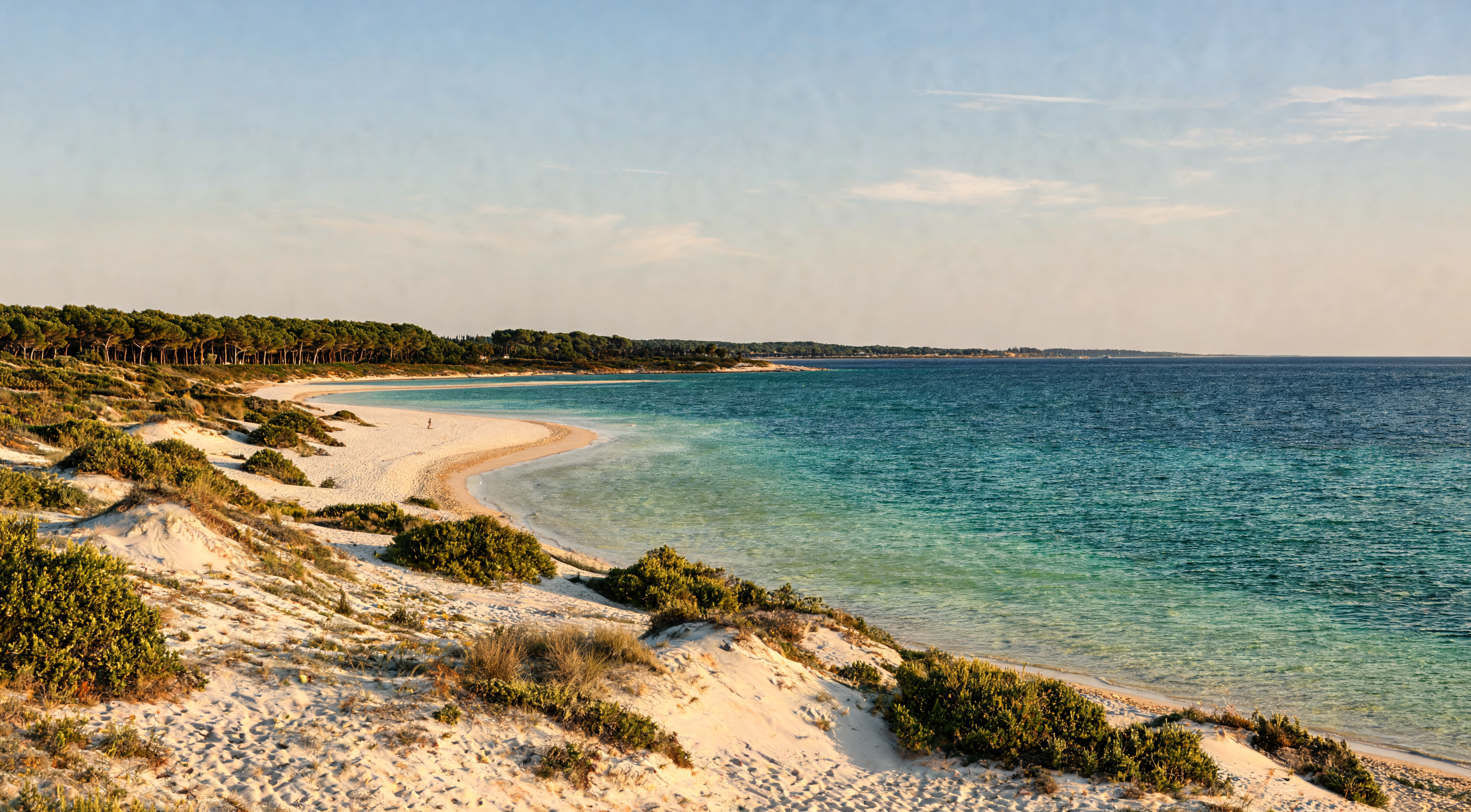
Walk into the sea at Pescoluse and something unusual happens: nothing happens. No sudden drop, no gasp at a cold current, no scramble over rocks. You keep walking, the water climbs past your knees, then your waist, and the sand stays soft and pale beneath your feet the whole way. It is the reason people started calling this stretch of coast the “Maldives of Salento” — and it is also, in a smaller way, a fair description of what buying property here feels like compared to the rest of the coast: a gentle, gradual entry, not a sudden plunge.
The Beach That Gave the Coast Its Nickname
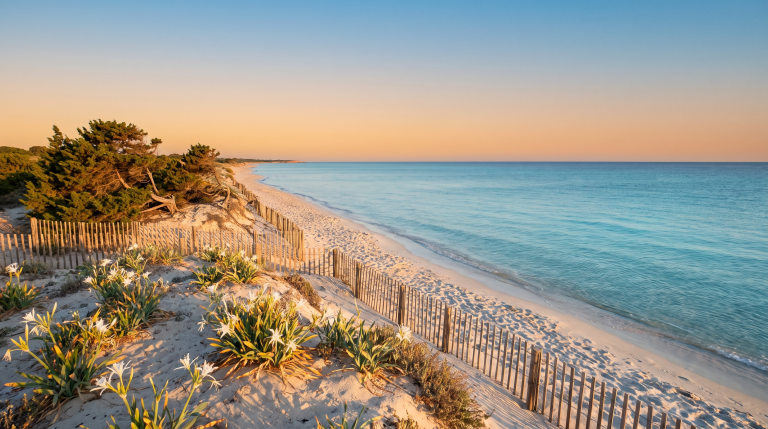
Marina di Pescoluse is the seaside hub of the comune of Salve, sharing the municipality’s short strip of coast with Posto Vecchio and Torre Pali. The beach itself runs for close to two kilometres of low white dunes, backed by pine scrub rather than hotels, with a seabed so gradual you can walk out for what feels like a hundred metres before the water reaches your shoulders. The “Maldives of Salento” name actually started as the name of a single historic beach club, open since 2000 just north of the village — but the water earned the nickname for the whole coastline honestly.
In short: the name comes from a beach club, not a geography lesson, but the description holds up. Pescoluse is part of Salve, its beach runs close to two kilometres, and the shallow, pale-sand seabed is the real reason the nickname stuck to the whole coastline.
Beyond Pescoluse — Torre Vado’s Quieter Neighbour
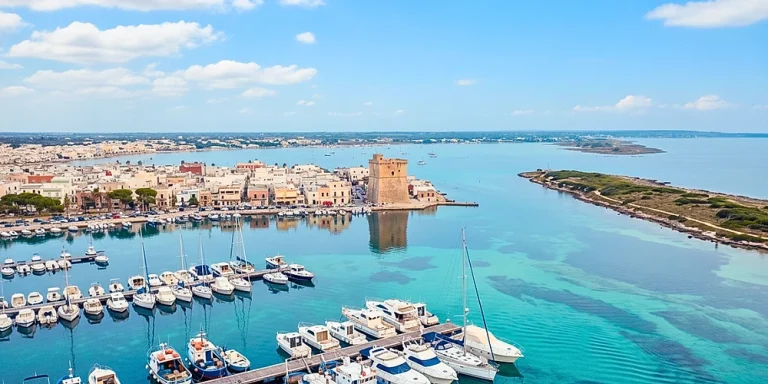
Drive a few minutes south along the coast road and the crowds thin out at Torre Vado. It is easy to assume Torre Vado belongs to Salve as well, since the beaches run together without any obvious break — but administratively it sits in the comune of Morciano di Leuca. That distinction matters less for a swim than it does for a buyer: different comune means a different local council, different building rules, and its own, separate track record on environmental management.
Worth knowing before you view a property here: Torre Vado’s coastline runs on from Pescoluse without a break, but Salve’s town hall has no authority over it — Morciano di Leuca does. The reward for the extra kilometres south is fewer crowds and a first-time Blue Flag in 2026.
Torre San Giovanni — Ugento’s Working Harbour Turned Beach Town
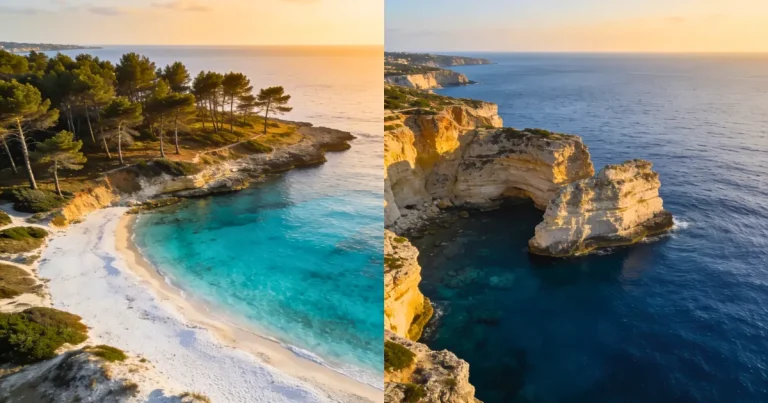
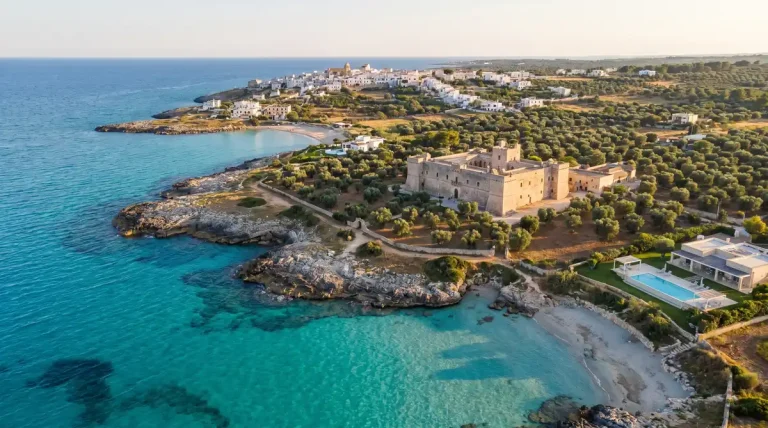
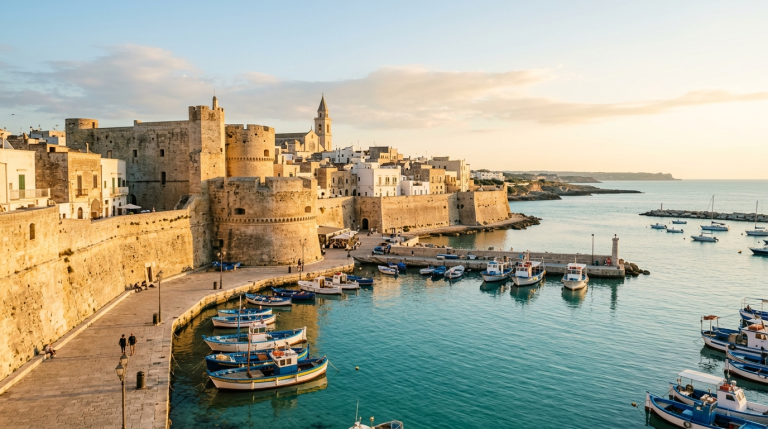
Further along, Torre San Giovanni is the main coastal frazione of the comune of Ugento, and it feels different again — less resort, more fishing village that gradually grew a beach scene around it. A 16th-century watchtower, built under Charles V as part of the coastal defence chain against pirate raids, still stands over the small working harbour, with a lighthouse added in 1932. The coastline here runs for about 1.5 kilometres, rocky to the north of the harbour and fine white sand to the south. Outside summer, the year-round population drops below 500 — a genuine off-season village, not a shuttered resort.
The short version: this is Ugento’s harbour town, not a purpose-built resort — a 16th-century watchtower and a working fishing fleet came first, the beach crowd came later. Rocky ground wraps the north side of the harbour, fine sand the south, and under 500 people call it home once summer ends.
Bandiera Blu, Three Times Over
In 2026, three separate comuni along this short stretch of coast — Salve, Morciano di Leuca and Ugento — all hold the Bandiera Blu, the international award given by the Foundation for Environmental Education (FEE) for bathing water quality, environmental management, safety and beach services. It is not a beauty contest: councils have to demonstrate water testing results, waste management and coastal upkeep every year to keep the flag, and Morciano di Leuca only entered the FEE circuit for the first time this year on the strength of that work.
What that means in practice: three separate councils passed FEE’s annual tests on water quality, safety and beach management in the same year, on a coastline barely thirty kilometres long. That is a pattern of upkeep worth noticing, not one town’s marketing win.
Getting There — Why the Drive Matters More Than the Map Suggests
On a map, this feels like the far end of Salento, and the drive confirms it: Lecce to Ugento is around 59 kilometres, about 52 minutes by car, and continuing on to Pescoluse adds a little more — around 55 minutes in total, on the route through Galatone, Galatina, Gallipoli, Taviano and Racale. That is noticeably further than Porto Cesareo or Gallipoli. It is also, in large part, the reason this stretch has stayed quieter and less built-up than those better-known Ionian towns.
The practical takeaway: budget the better part of an hour from Lecce, longer than the drive to Porto Cesareo or Gallipoli. That extra distance is precisely what has kept this stretch quieter, less built-up, and cheaper to buy into.
What Property Looks Like on This Stretch
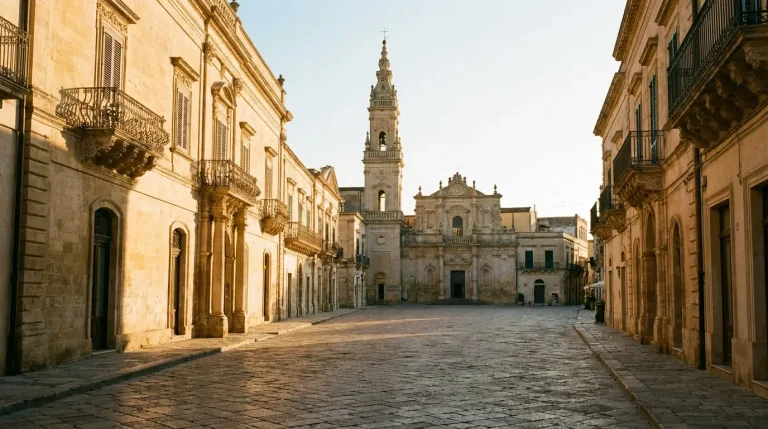
This is not yet a destination of tower-block seafront apartments. Most of what comes to market near Pescoluse, Torre Vado and Torre San Giovanni is low-rise: single- or two-storey villas and apartments set back among the dunes and pine scrub, plus older village houses in the historic centres of Salve and Ugento a few kilometres inland, where prices drop further still. The same gradual, no-surprises approach that describes the seabed applies to what you pay here, too: no sudden jump in price the moment a property comes into sight of the water.
The honest range, not a postcode average: across Salento’s marine belt generally, expect somewhere between €1,100 and €2,200 per square metre for seafront or near-seafront property, with this quieter stretch typically sitting toward the lower end. The exact figure always depends on the specific property.
Frequently Asked Questions
Is Pescoluse its own town?
No. Marina di Pescoluse is a frazione (a locality without its own municipal government) of the comune of Salve, alongside Posto Vecchio and Torre Pali. Property records, planning permissions and local taxes are all handled by the Salve town council, not by a separate Pescoluse authority.
Are Pescoluse and Torre Vado in the same comune?
No, and this is a common mix-up because the beaches run together with no visible boundary. Pescoluse belongs to Salve, while Torre Vado belongs to the separate comune of Morciano di Leuca a little further south.
How far is Pescoluse from Lecce?
Around 55 minutes by car on the inland route through Galatone, Galatina, Gallipoli, Taviano, Racale and Ugento. It is further than Porto Cesareo or Gallipoli, which are both closer to Lecce.
Which towns here have Blue Flag beaches?
In 2026, all three comuni along this stretch hold the Bandiera Blu: Salve (covering Pescoluse, Posto Vecchio and Torre Pali), Morciano di Leuca (covering Torre Vado, a first-time entry this year) and Ugento (covering Torre San Giovanni).
Is this a good area for a holiday rental investment?
It can be, but the season here is shorter and more concentrated around July and August than in busier Ionian towns like Gallipoli, and we do not publish a rental yield figure for this stretch without running the numbers on a specific property first. If rental income matters to your decision, ask us for a property-specific assessment rather than relying on a general estimate.
Talk to a Local Expert
We have been helping international buyers navigate the Salento property market since 1994, including this quieter southern stretch of the Ionian coast. If you are weighing Pescoluse, Torre Vado or Torre San Giovanni against the busier towns further north, tell us your budget, your timeline and what you want from the property — holiday home, rental, or both — and we will put together options that actually match, in English.
By Camillo Barone — FIMAA Estate Agent, Mondo Immobiliare Lecce
Updated: 17 August 2026
Free: The Salento Buyer's Checklist & Cost Breakdown
Know exactly what buying property in Salento costs — before you make an offer. Get the free 2026 checklist and total-cost breakdown by email.