Trullo for Sale in Puglia: Complete Buyer’s Guide 2026
If you have been researching property in southern Italy, you have almost certainly come across the trullo — that extraordinary conical stone house that has become one of the most recognisable images of Puglia. British, German, Dutch and American buyers regularly ask us: “Can I really buy a trullo? How much does it cost to restore one? And is it a good investment?”
This guide answers all of those questions honestly, with the benefit of over 30 years of experience helping international buyers navigate the Pugliese property market.
What Is a Trullo?
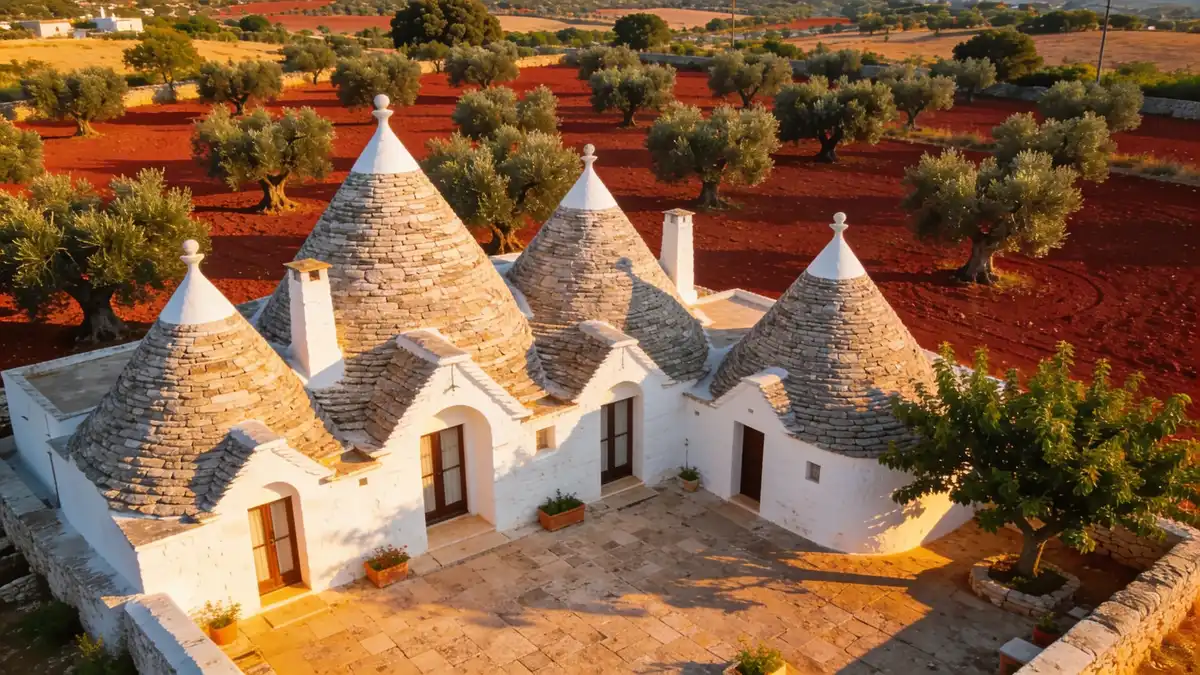
A trullo (plural: trulli) is a traditional dry-stone dwelling with a conical roof, built using a technique that dates back centuries. The walls are constructed without mortar — each stone is carefully balanced and locked in place — and the distinctive roof is formed by concentric rings of flat limestone slabs tapering to a point.
The most famous concentration of trulli is in Alberobello, a UNESCO World Heritage Site in the Valle d’Itria, but trulli are found throughout the province of Bari, Brindisi and Taranto — including in many parts of Salento.
Each trullo has a cone (or multiple cones, called “fuochi”), and the more cones, the larger and more valuable the property. A single-cone trullo might measure 20–30 sqm; a multi-cone complex with outbuildings can easily exceed 200 sqm.
Where to Buy a Trullo in Puglia
Trulli are concentrated in specific areas:
- Valle d’Itria (Alberobello, Locorotondo, Cisternino, Martina Franca) — the heartland of trulli culture. Highest density, highest prices, most tourist activity.
- Fasano and Ostuni surroundings — popular with international buyers, excellent for rental income.
- Salento countryside — fewer trulli than the Valle d’Itria, but more affordable and increasingly sought after by buyers who want tranquillity alongside coastal access.
- Brindisi province countryside — more rural, lower prices, ideal for buyers seeking authenticity over tourism infrastructure.
In Salento specifically, you will find trulli most frequently in the inland countryside between Lecce, Ostuni and Brindisi — often set among ancient olive groves on plots of one to several hectares.
How Much Does a Trullo Cost?
Prices vary enormously depending on location, condition, size and number of cones. As a general guide:
| Property type | Price range |
|---|---|
| Single cone, needs restoration | €30,000–€80,000 |
| Multi-cone complex, to restore | €80,000–€200,000 |
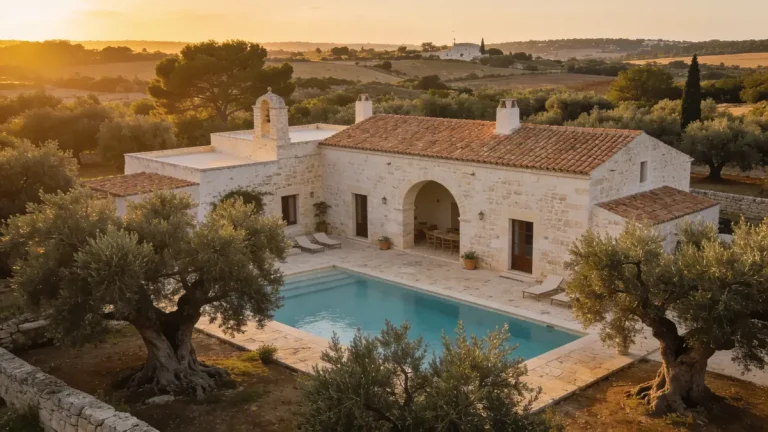
| Restored trullo, 2–3 bedrooms | €150,000–€350,000 |
| Luxury restored complex with pool | €350,000–€800,000+ |
Properties closer to Alberobello or with sea views command premiums. Countryside trulli in less-known areas offer significantly better value for buyers who are less concerned with proximity to tourist infrastructure.
Restoration Costs: The Most Important Thing to Understand
This is where many buyers are caught off guard. A trullo that appears on the market for €60,000 may require €80,000–€150,000 of restoration work before it is habitable — let alone comfortable by northern European standards.
Typical restoration costs in Puglia (2026):
- Basic structural repair and waterproofing: €400–€700 per sqm
- Full restoration to high standard: €800–€1,200 per sqm
- Luxury finish with pool, terraces, landscaping: €1,500–€2,500 per sqm+
A 100 sqm trullo complex restored to a good standard might therefore cost €80,000–€120,000 in works alone, on top of the purchase price.
Key restoration considerations:
- The conical roof requires specialist craftsmen — trullisti — who are increasingly rare and expensive
- Planning permissions for alterations are strictly controlled, especially for listed trulli
- Underground cisterns (antiche cisterne) often need restoration or modernisation
- Connecting to mains water, electricity and sewage can be costly in rural locations
- Energy efficiency upgrades are difficult without altering the appearance
Can You Renovate a Trullo the Way You Want?
This is a common concern for international buyers accustomed to open-plan living. The short answer is: yes, but within limits.
Trulli are protected by Italian cultural heritage legislation. You can generally:
- Restore and repair the existing structure
- Install modern kitchens, bathrooms and systems internally
- Add a swimming pool (with planning permission)
- Build annexes on adjacent land (subject to local planning rules)
You generally cannot:
- Demolish cones or significantly alter the external profile
- Add extensions that alter the trullo’s character
- Change the traditional stone roof to modern materials
An experienced geometra (surveyor/architect) familiar with local planning rules is essential before committing to any purchase.
Trullo as a Holiday Rental Investment
Restored trulli in good locations have proven to be excellent short-term rental investments. A well-marketed 2–3 bedroom trullo with a pool in the Valle d’Itria or Salento countryside can achieve:
- Peak season (July–August): €1,500–€3,500 per week
- Shoulder season (May–June, September–October): €800–€2,000 per week
- Annual income: €20,000–€60,000+ depending on property and marketing
The “trullo experience” is a powerful marketing asset — guests come specifically for the architecture and authenticity. This gives well-presented trulli a competitive advantage over conventional villas.
Common Mistakes to Avoid
- Underestimating restoration costs — always get a detailed survey and quotes before agreeing a price
- Buying without a local lawyer — title issues and planning irregularities are common in older properties
- Ignoring accessibility — rural trulli can be charming but difficult to reach in winter, which affects rental income
- Overlooking water supply — many countryside properties depend on rain-fed cisterns; mains connection is not always possible
- Not visiting in winter — a trullo that looks magical in summer can feel very isolated in January
Frequently Asked Questions
Can foreigners buy a trullo in Italy?
Yes, absolutely. There are no restrictions on foreign nationals purchasing property in Italy, including trulli. The buying process is the same as for any Italian property — you will need a codice fiscale (Italian tax number) and to complete the purchase through a notary.
Do trulli need planning permission to be used as holiday rentals?
In most cases, yes. Italy requires holiday rental properties to be registered with the local municipality. Requirements vary by region. Your lawyer or estate agent should guide you through the process.
How long does a trullo restoration take?
A typical full restoration takes 12–24 months. Complex projects with extensive landscaping, pool construction and interior design can take longer. Italian building processes are often slower than in northern Europe — build in contingency time and budget.
Is it cheaper to buy a restored trullo or restore one yourself?
Buying restored is usually more expensive upfront but less risky. Restoring yourself gives more control over the result but requires time, patience and reliable local contractors. Many international buyers find that what they save on the purchase price is absorbed by unexpected restoration costs and delays.
How We Can Help
At Salento Properties, we have access to trulli and rural properties throughout Salento and the wider Puglia region — including off-market opportunities that never appear on public listings. We work with trusted geometri, lawyers and restoration specialists who have years of experience with these properties.
We will give you an honest assessment of any property’s potential and realistic costs before you make any commitment. Our team is English-speaking and based in Lecce and Porto Cesareo.